
Enter Password
Designed an insight-driven mobile MVP that helps users identify potential signs of endometriosis by contextualizing symptom and menstrual data against medical norms.
Jan 2024~Feb 2024
UI Designer
Reanne (株式会社asai)
Figma
Zoom
Notion
Procreate
Endometriosis often goes undiagnosed for years despite affecting millions of women worldwide. Limited awareness and accessible educational resources, particularly in Japan, make early detection difficult.
Challenge: How might we help users recognize potential signs of endometriosis earlier by making complex health information easier to understand and act upon?
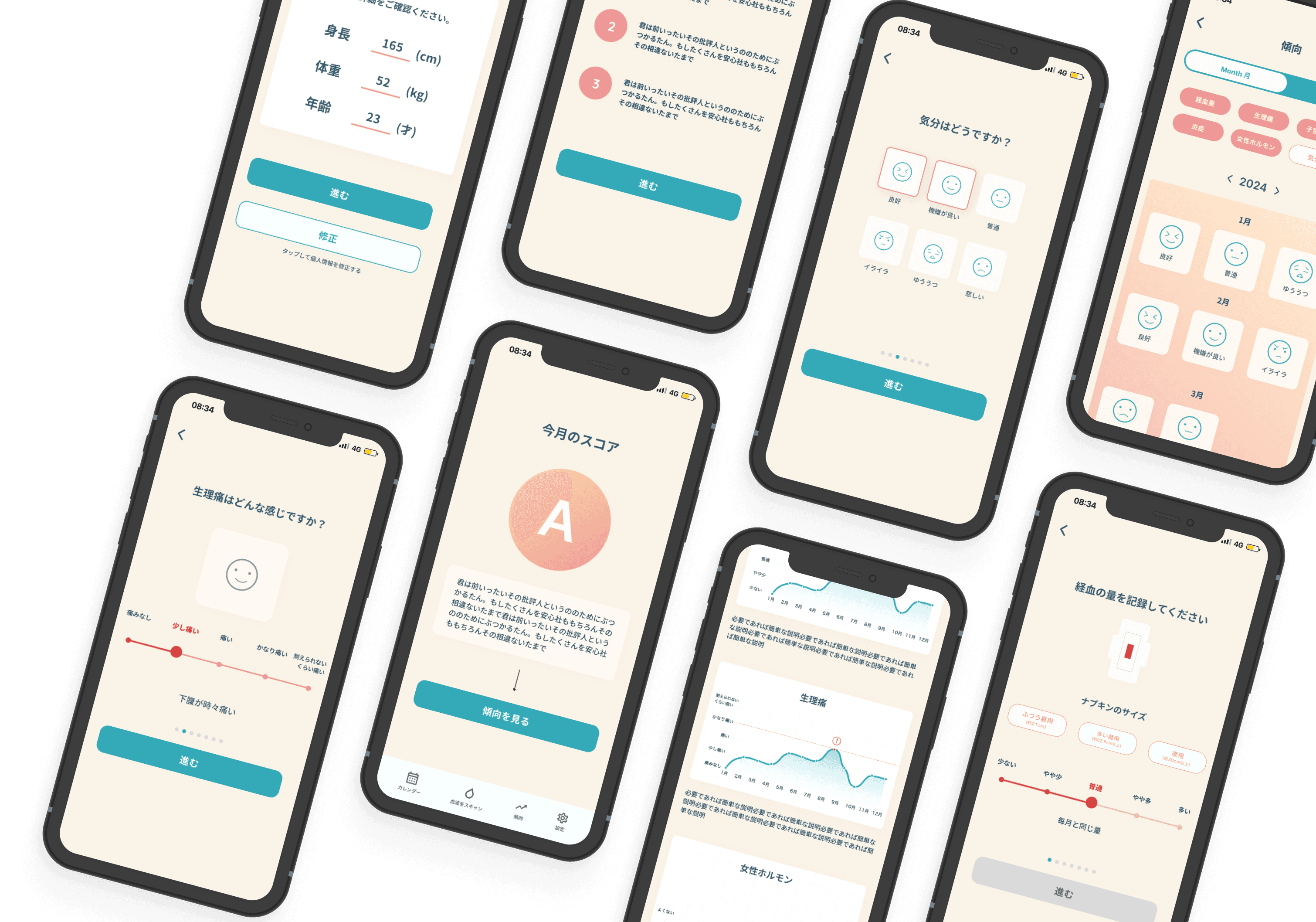
Designed an MVP for Reanne, a Japanese women's health app that helps users identify potential signs of endometriosis through symptom tracking and personalized health insights.
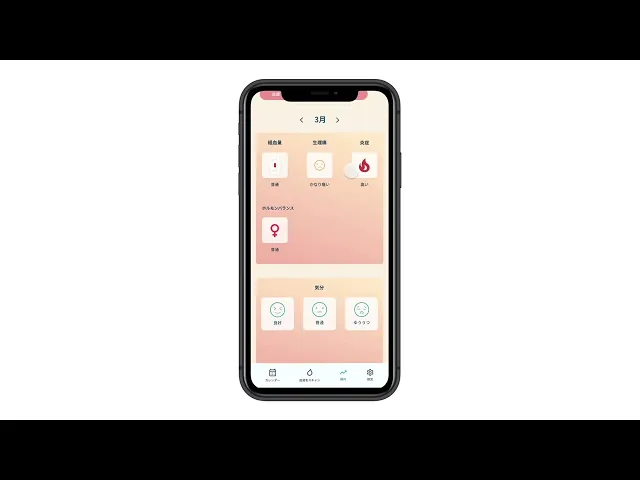
Unlike traditional period trackers, Reanne allows users to track symptoms such as mood, pain, and menstrual flow, then compares those patterns against medical guidelines and anonymized user trends to highlight potential abnormalities.
As an early-stage MVP, the project focused on validating the core user experience. More advanced capabilities, such as blood analysis, were intentionally scoped for future iterations.
I analyzed Japanese and Western women's health apps to understand differences in UI patterns, information hierarchy, and user expectations. While Japanese apps tended to favor information-dense, familiar layouts, Western apps emphasized simplicity and guided user experiences. These insights helped balance familiarity with clarity when designing the MVP.
Key Design Opportunities
Personalized onboarding questionnaires help tailor the experience from the first use.
Soft visual styles and illustrations make sensitive health topics feel more approachable.
Educational content helps users better understand symptoms and health conditions.
Advanced analytics and personalized insights are commonly offered as premium features.
These findings directly informed the app's onboarding flow, personalization strategy, visual direction, and feature prioritization.
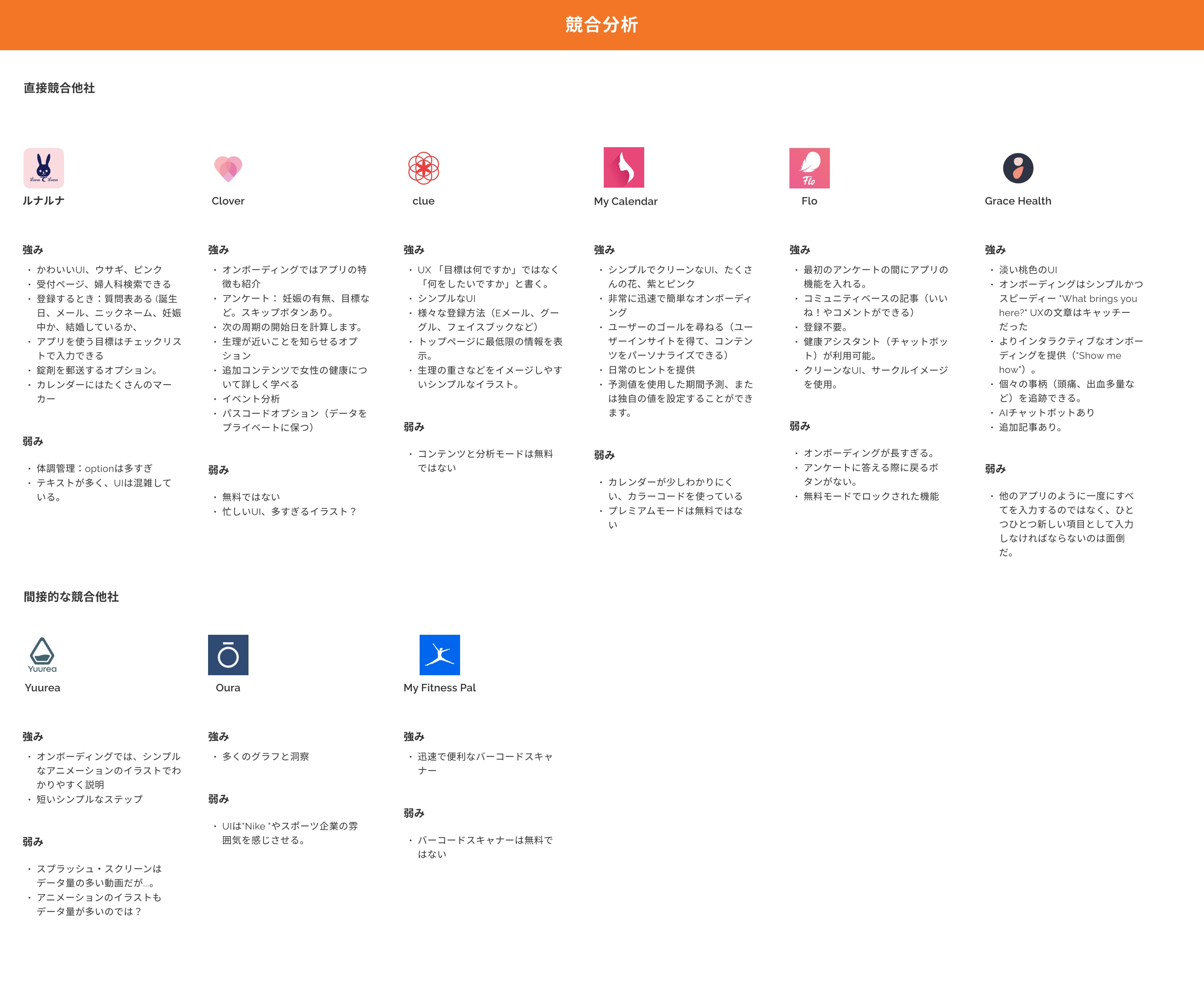
Competitive analysis: summarized overview of selected apps.
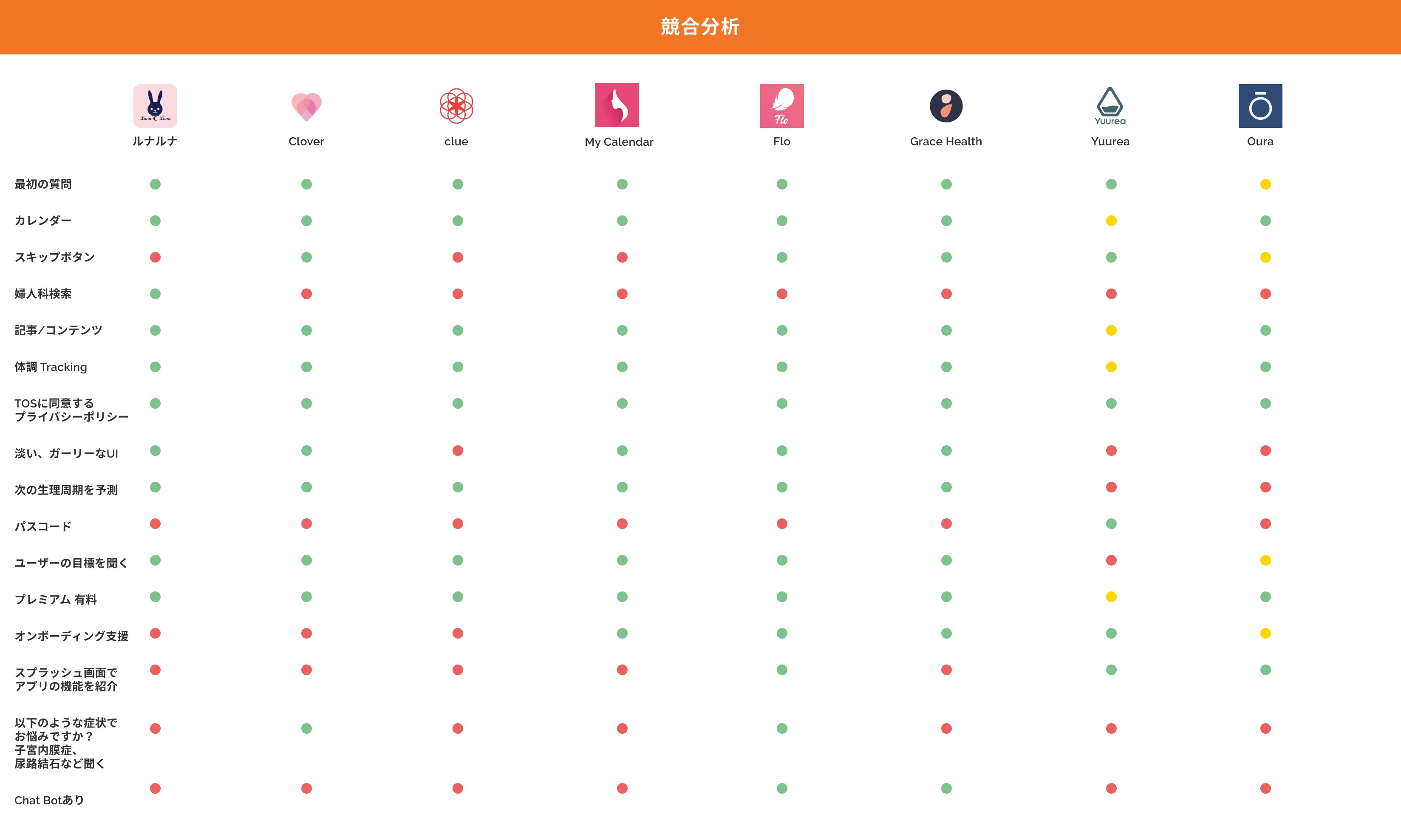
Compared functionality across leading women's health apps to identify common patterns and market gaps.
To better understand the diagnostic journey, my teammate interviewed women who had experienced symptoms of endometriosis or had received a diagnosis. Together, we analyzed the research findings and used journey maps to identify key pain points, including symptom recognition, information seeking, and the first interactions with healthcare providers.
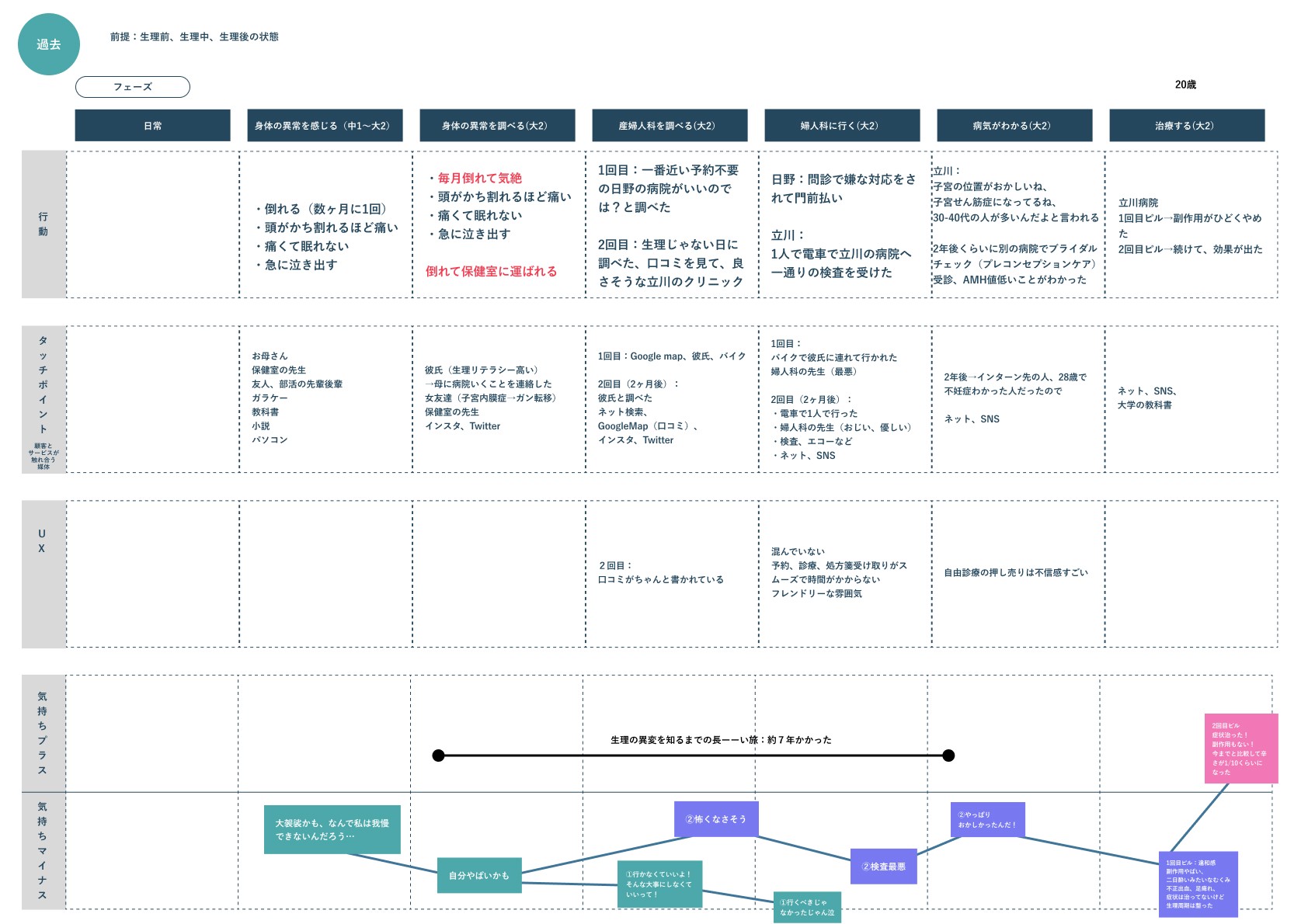
The journey map highlighted where users experienced confusion, delayed action, and uncertainty, revealing opportunities to support earlier symptom recognition and healthcare seeking.
Based on the interview findings, we defined a primary persona representing users experiencing symptoms of endometriosis. A key insight was the need to help users recognize abnormal symptoms earlier and feel confident about seeking medical attention. The persona served as a shared reference throughout the design process, helping prioritize features, content, and user flows.
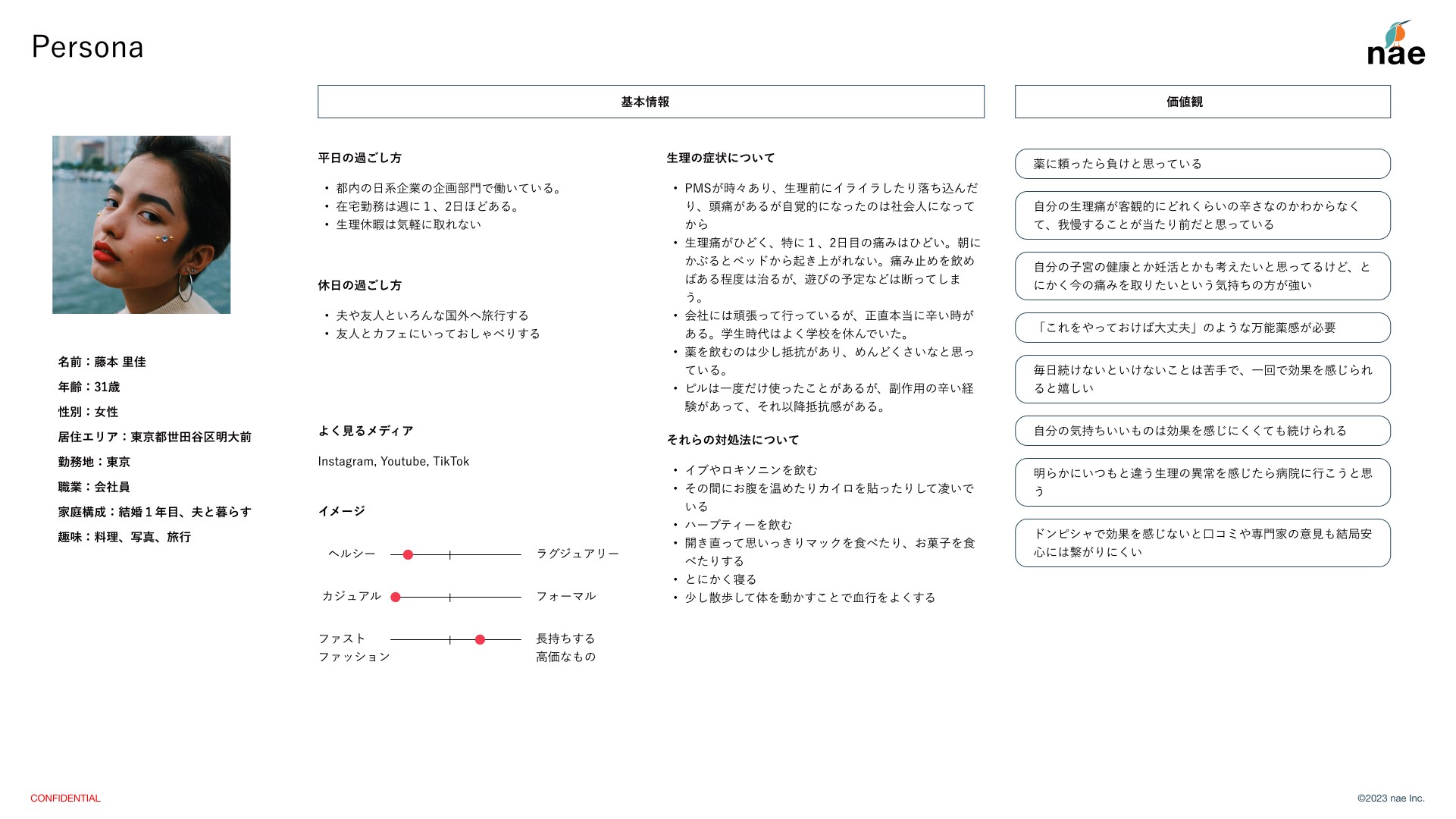
The persona consolidated recurring behaviors, motivations, and pain points identified during user research, helping align design decisions around a shared understanding of the target user.
Based on research insights and competitive analysis, I created low-fidelity wireframes to explore information architecture, screen layouts, and core user flows before investing in visual design.
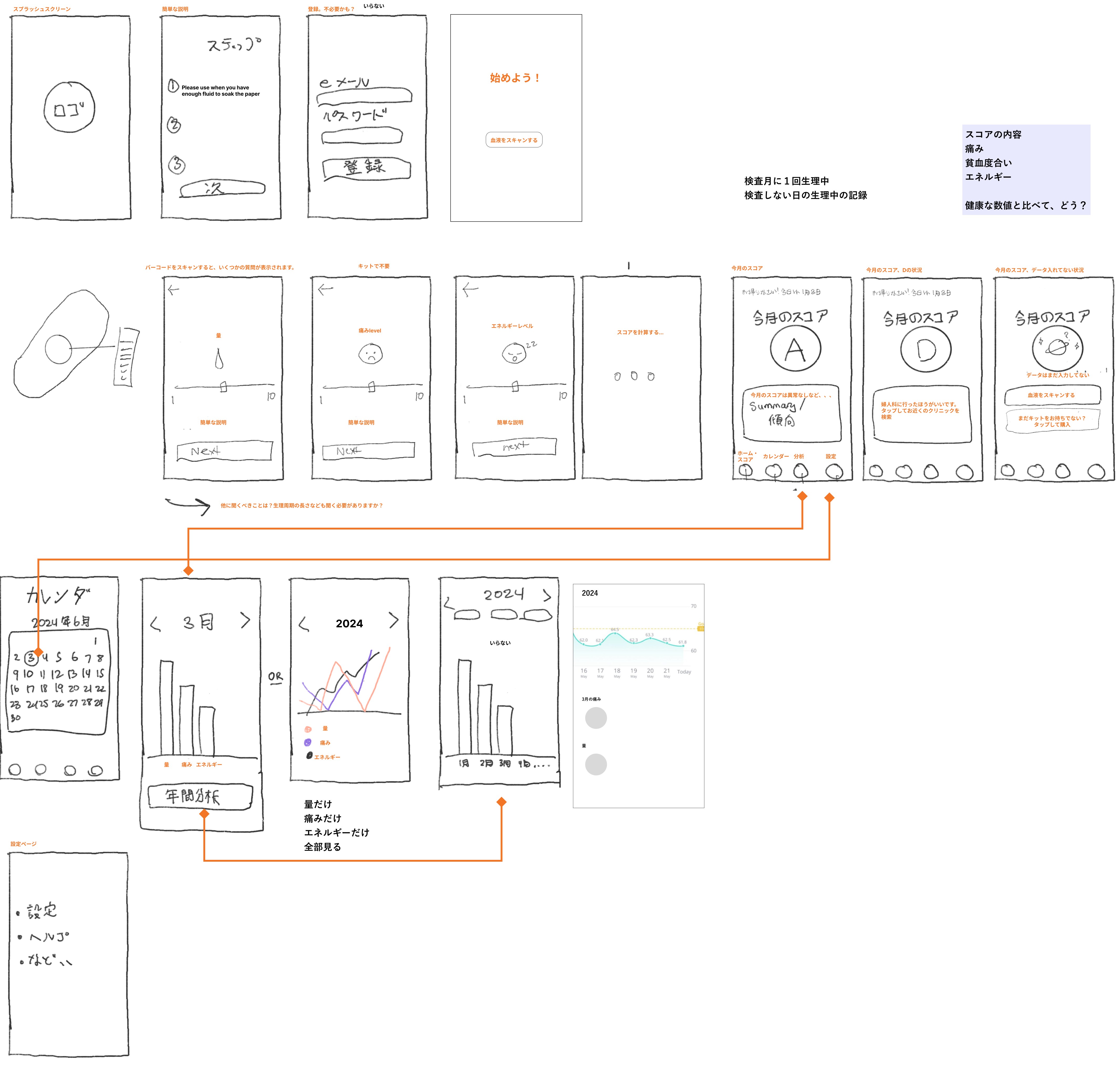
After validating the overall structure with my team, I refined the wireframes in Figma by defining navigation patterns, interaction flows, and screen relationships across the core user journey.
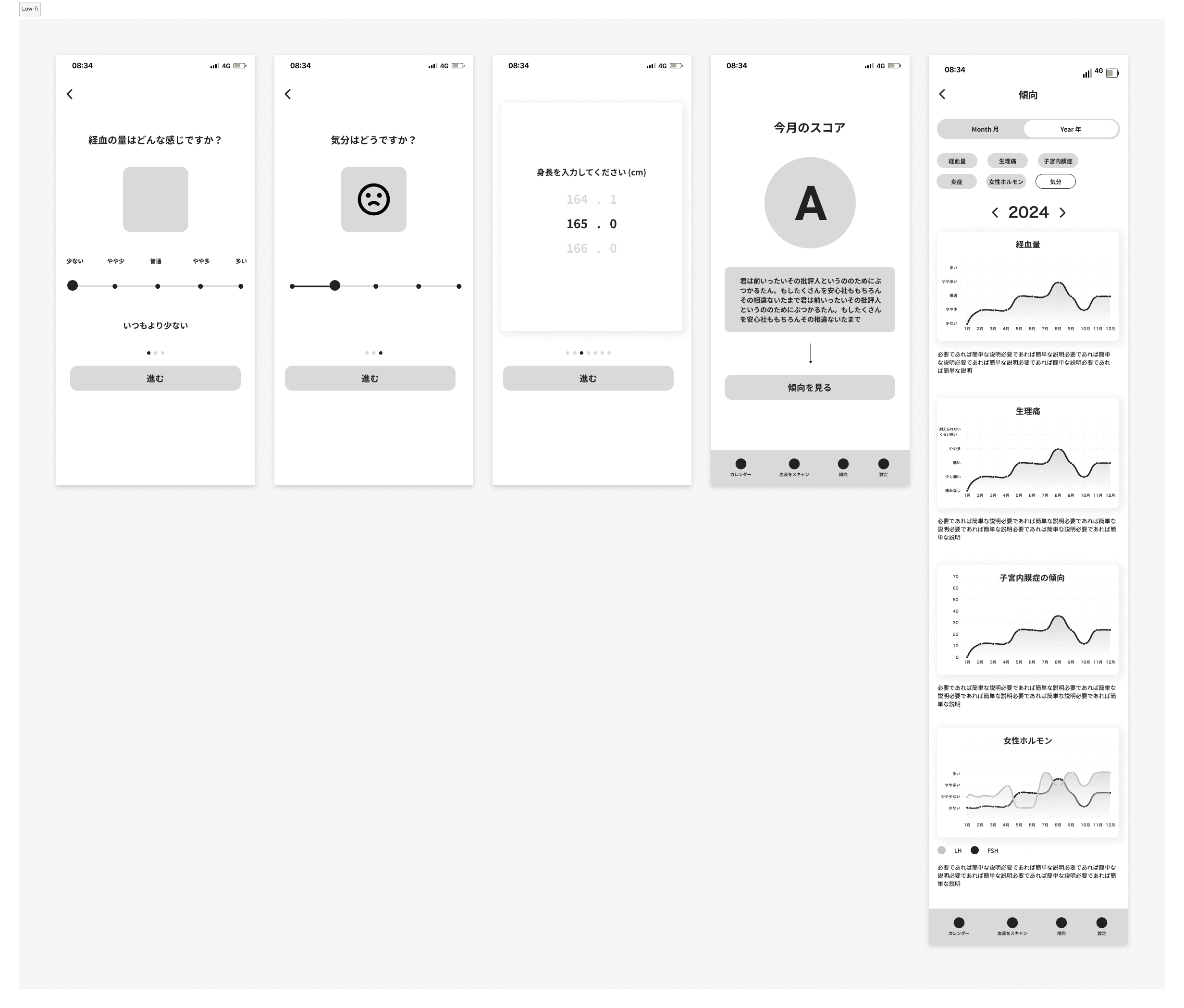
Select wireframes
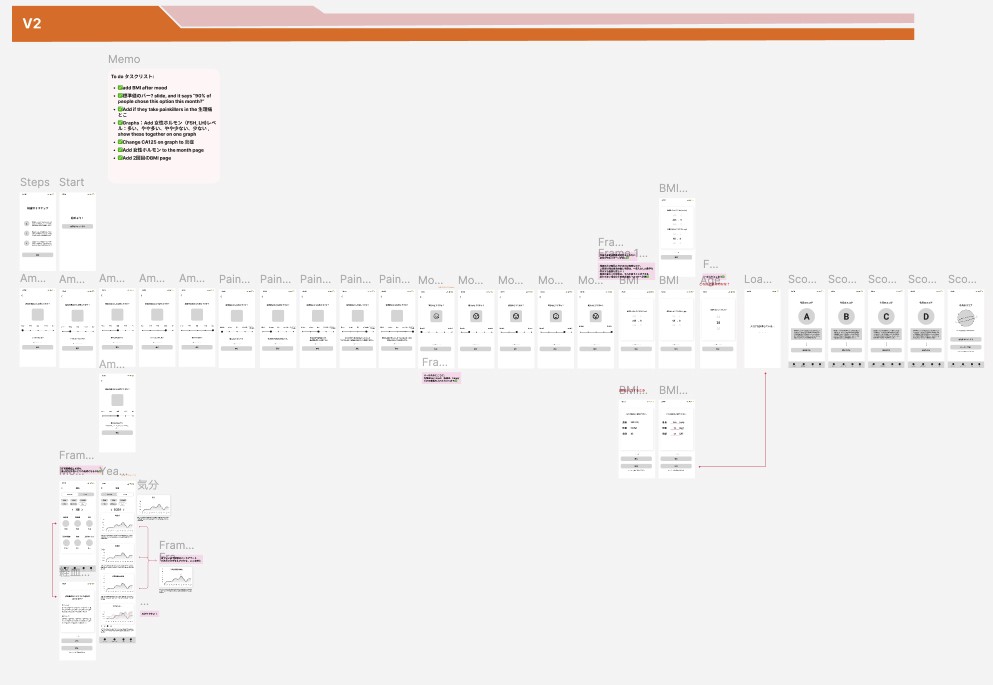
The mid-fidelity wireframes connected individual screens into complete user flows, allowing the overall experience to be evaluated before applying the final visual design.
Building on the validated wireframes, I applied the established visual direction and brand identity to create high-fidelity designs, refining the visual hierarchy, readability, and overall user experience.
I designed separate onboarding experiences for first-time and returning users. Returning users could review and update previously entered information, such as height, weight, and age, reducing repetitive input and creating a smoother repeat experience.
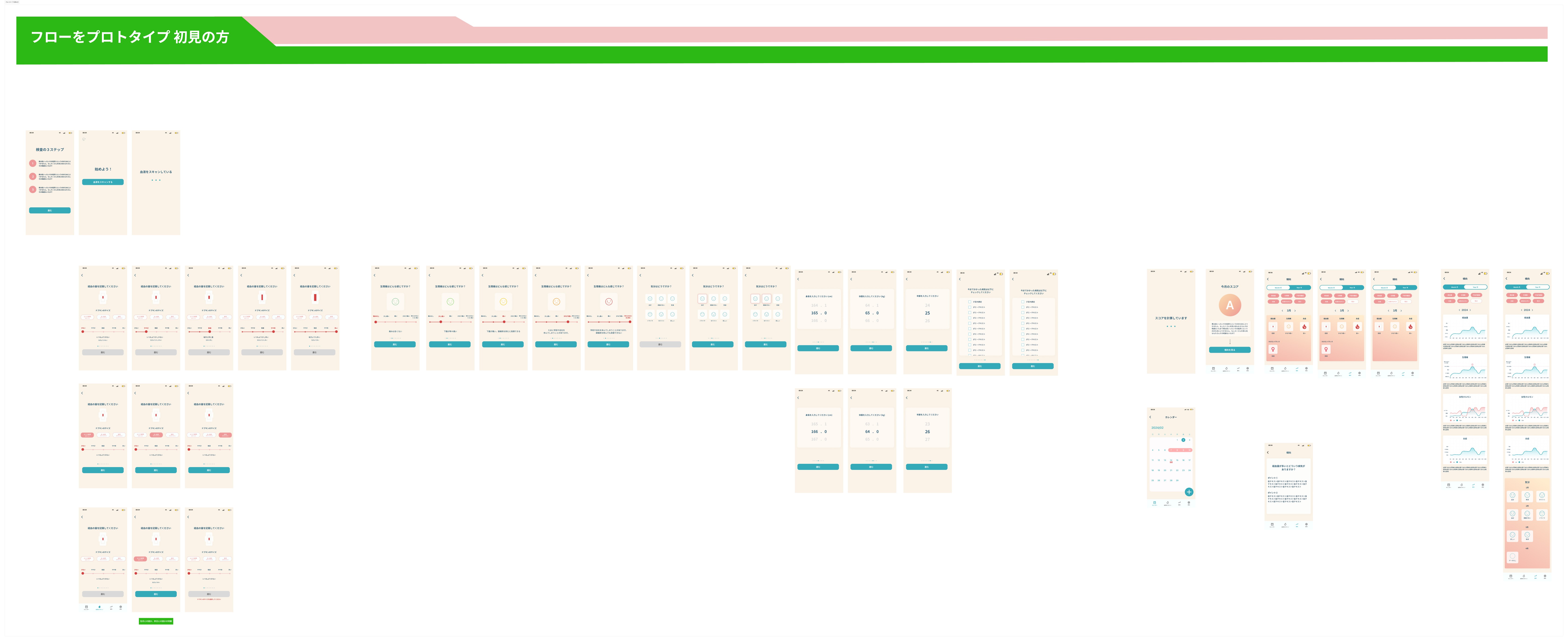
The final prototype supported two primary journeys: onboarding new users and enabling returning users to quickly continue tracking their health with minimal friction.
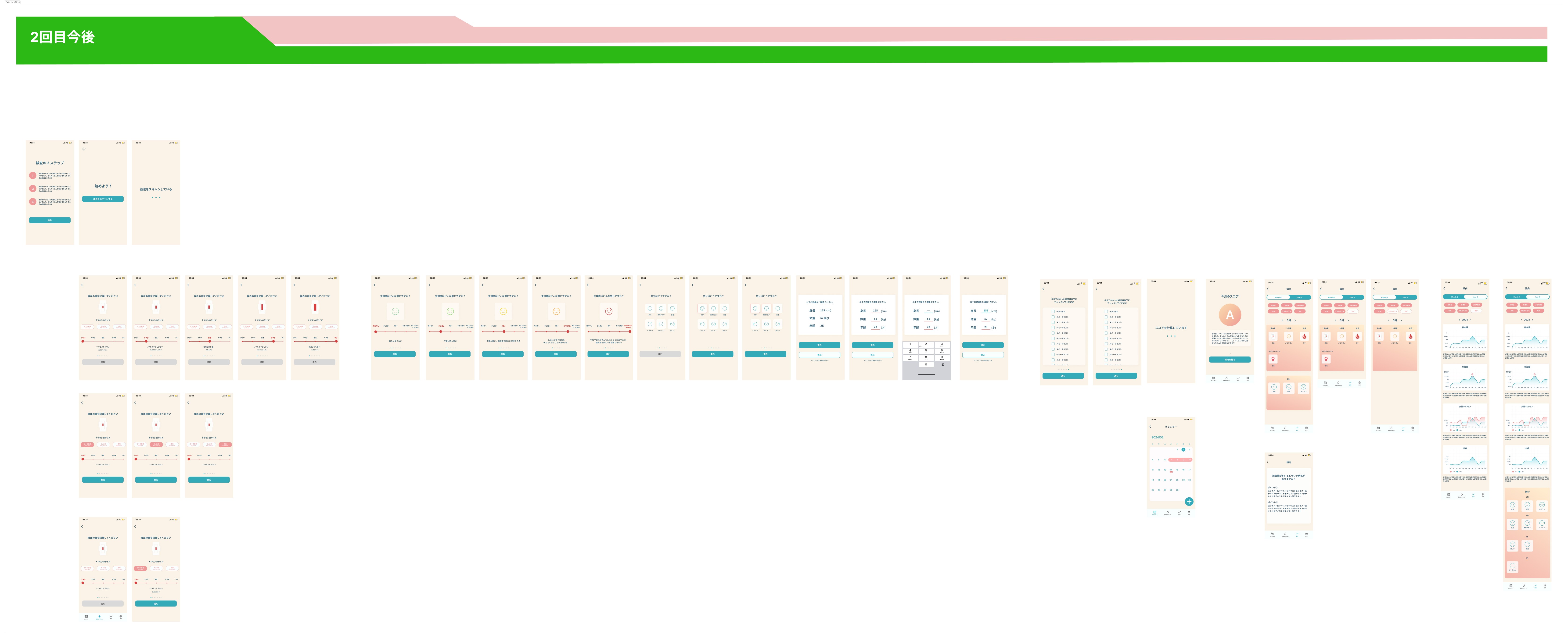
Hi-fi Wireframes for repeat users
Design reviews led to several iterations that improved clarity, usability, and the quality of the health data collected.
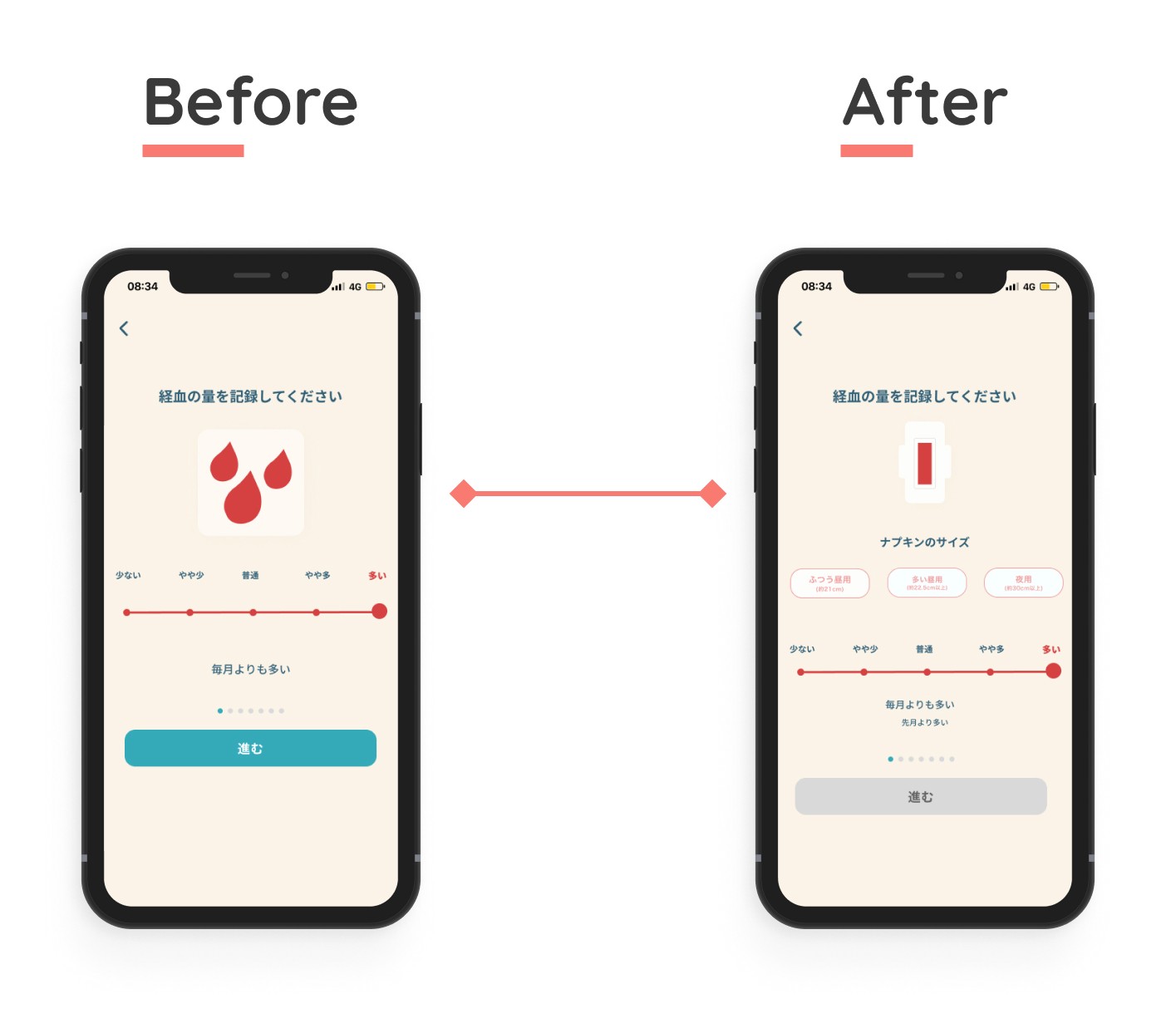
Problem: Initial concepts used abstract teardrop icons to represent menstrual flow, making it difficult for users to accurately relate the options to their real-world experience.
Design Response: The interface was updated to use period pad illustrations, providing a more familiar reference that helped users estimate flow more accurately. Additional options, such as daytime and nighttime pads, along with contextual comparisons (e.g., 「先月より多い」), further improved confidence and consistency when recording symptoms.
Problem: A simple "poor" to "good" slider failed to capture the complexity of users' emotional experiences.
Design Response: Replacing the slider with selectable mood tags enabled users to record more nuanced emotional states while improving the consistency and usefulness of the collected data.
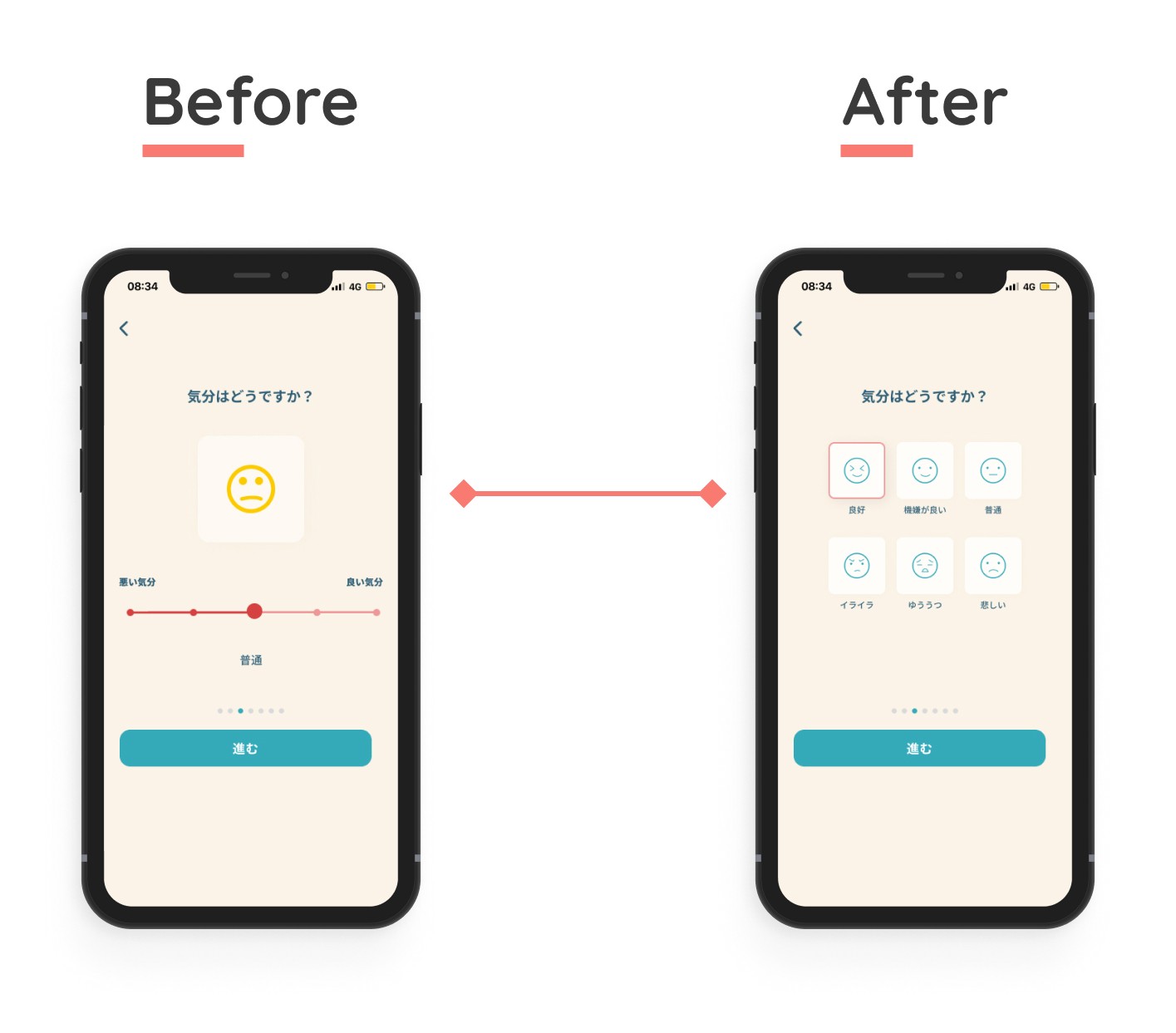
After iterative refinements, the final designs were transformed into an interactive prototype and handed off to the client. The solution was well received, with the client expressing strong satisfaction with the final experience.
Designing for a sensitive health experience taught me that users often need more than data — they need confidence in understanding what that data means. When symptoms are subjective, the challenge is creating an experience that provides clarity and reassurance without causing unnecessary concern.
A key design challenge was translating complex medical concepts into an intuitive experience. The product needed to surface meaningful health patterns while maintaining a balance between scientific accuracy, simplicity, and user trust. This required carefully designing inputs that captured valuable information without creating unnecessary friction.
Working within product and regulatory constraints also shaped the experience. Rather than positioning the product as a diagnostic tool, I focused on helping users build awareness, recognize potential concerns, and take informed next steps.
What I would improve
With more time, I would deepen the research by refining interview frameworks and synthesizing insights more systematically to further inform design decisions.
© 2026 Crystal Ma. All rights reserved.
Designed an MVP for Reanne, a Japanese women's health app that helps users identify potential signs of endometriosis through symptom tracking and personalized health insights.
The persona consolidated recurring behaviors, motivations, and pain points identified during user research, helping align design decisions around a shared understanding of the target user.